
How to Start a Car Valeting Business in the UK (2026 Guide)
Startup Costs, Potential Earnings, Equipment, Insurance & How to Find Customers
Are you thinking of starting your own car valeting business? Let's look into this idea as a business opportunity or even full time income.
Whether you're looking for a weekend side hustle, want to leave your current job or have ambitions to build a successful car detailing company, the car care industry offers an interesting opportunity.
You don't necessarily need expensive premises, employees or tens of thousands of pounds to get started. Many valeting businesses begin with one person, some professional cleaning equipment and a vehicle.
But how much does it really cost? How much money could you earn? And perhaps most importantly, where will your customers come from?
In this comprehensive guide, we will cover everything you need to know about starting a car valeting business in the UK in 2026, including realistic costs and income, mobile versus premises-based operations, pricing, equipment and practical marketing strategies.
1. Is Starting a Car Valeting Business a Good Idea?
Car valeting can be an attractive small business because you can start relatively small and expand as demand grows.
Your potential customers include:
Busy professionals who want their vehicles cleaned at home or work.
Families needing regular interior and exterior cleaning.
Car enthusiasts interested in premium detailing.
People preparing vehicles for sale.
Taxi and private-hire drivers.
Car dealerships and used vehicle traders.
Businesses operating company vehicles and small fleets.
The industry also offers opportunities to develop repeat business. Unlike many one-off services, vehicle cleaning can become a regular monthly or fortnightly purchase.
However, there are some challenges. You'll face competition from budget hand car washes, automated car washes, established detailers and other mobile operators. Bad weather, travelling time and seasonal demand can also affect your working week.
The key is to build a business around quality, convenience, reliable customer service and profitable pricing rather than trying to be the cheapest car cleaner in town.
2. Mobile Car Valeting vs Having Your Own Premises
One of your biggest early decisions is whether to travel to customers or operate from a fixed location.
Option A: Start a Mobile Car Valeting Business
A mobile valeting business travels to customers' homes, workplaces or suitable commercial locations. You might operate from an existing vehicle initially, moving to a fully equipped van as the business grows.
Advantages:
Lower startup costs than renting a workshop.
No commercial premises rent.
Flexibility to work across several locations.
Customers appreciate the convenience.
Easier to test demand before committing significant money.
Disadvantages:
Travel time between customers.
Weather can affect outdoor work.
You may need onboard water and electricity.
Wastewater management requires planning.
Limited room for equipment and specialist treatments.
For many beginners, mobile valeting is the most practical starting point.
Option B: Open a Car Valeting Unit or Detailing Studio
Alternatively, you could rent a garage, industrial unit or dedicated vehicle cleaning premises.
Advantages:
A controlled environment for specialist detailing.
Customers bring their vehicles to you.
Easier to store equipment and cleaning products.
Opportunity to offer premium paint correction and protection services.
Potential to employ staff and increase capacity.
Disadvantages:
Rent, business rates and utility bills.
Deposits and fitting-out costs.
Drainage and trade-effluent requirements.
Greater financial commitment before you have regular customers.
A permanent unit is particularly attractive for specialist services such as machine polishing, ceramic coatings and paint protection.
Our recommendation: If you're starting with a limited budget, consider mobile valeting first. Build a customer base, establish your pricing and only move into premises when the extra facilities make financial sense.
3. How Much Does It Cost to Start a Car Valeting Business in the UK?
Startup costs depend heavily on whether you already own a suitable vehicle, how professional your equipment needs to be and which services you intend to offer.
Here are three illustrative starting budgets:
Business Model | Estimated Startup Budget |
|---|---|
Part-time valeting using an existing vehicle | £700-£2,000 |
Professional mobile valeting setup | £2,500-£7,000 excluding vehicle purchase |
Fixed valeting unit or detailing studio | £10,000-£30,000+ |
These are planning estimates, not guaranteed quotes. Your actual costs could be considerably higher, particularly if you need to buy a van, adapt a premises or install compliant drainage.
Example Mobile Valeting Equipment Costs
Equipment | Estimated Cost |
|---|---|
Pressure washer | £120-£400 |
Wet and dry vacuum | £80-£250 |
Upholstery extractor | £150-£450 |
Professional cleaning chemicals | £150-£350 |
Microfibre cloths, brushes and buckets | £100-£250 |
Water tank and fittings | £100-£300 |
Portable power supply or generator | £250-£700 |
Hose reels and accessories | £100-£300 |
Basic branding and marketing materials | £100-£300 |
Not every item is essential on day one. The equipment you'll need depends on your services and whether you use customer-provided water and power, with their agreement.
You'll also need to budget for insurance, suitable wastewater arrangements, ongoing chemical supplies, travel and vehicle running costs.
Do You Need to Buy a Van?
Not necessarily, you can begin with an existing suitable vehicle if you have enough room to transport your equipment safely.
However, a van offers several advantages. It can carry a larger water tank, safely store equipment and provide a professional appearance when branded.
A used van could add several thousand pounds to your initial investment, while a newer vehicle may cost substantially more.
Avoid buying an expensive van purely for appearance before you've established regular demand.
4. What Equipment Do You Actually Need?
It's tempting to buy every detailing product and piece of equipment available. But starting lean can help protect your cash flow.
For a basic exterior and interior valeting service, consider:
Pressure washer and appropriate vehicle-cleaning attachments.
Wash buckets with grit guards.
Quality wash mitts and microfibre towels.
Wheel brushes and tyre cleaning products.
Suitable pre-wash and vehicle shampoo.
Wet/dry vacuum cleaner.
Interior brushes and cleaning products.
Glass cleaner and detailing cloths.
Suitable protective gloves and other PPE.
Secure storage and transport for chemicals and equipment.
As the business grows, you might introduce extraction machines, steam cleaning equipment, machine polishers and specialist paint protection products.
Professional training is particularly important before offering machine polishing, ceramic coatings or treatments that could damage customers' vehicles if applied incorrectly.
5. What Services Should You Offer?
Rather than advertising dozens of confusing options, create three or four clear service packages.
Basic or Maintenance Valet
Suitable for vehicles that are already reasonably clean.
Typical services might include an exterior wash, wheel cleaning, interior vacuum, dashboard wipe and window cleaning.
Suggested starting price: £35–£55
Standard Interior & Exterior Valet
A more thorough clean for customers who want their vehicle refreshed inside and out.
This might include deeper wheel cleaning, interior detailing, door shuts and a paint protection finish.
Suggested starting price: £60–£90
Full Valet
A more intensive service covering both interior and exterior surfaces.
Depending on the package, this could include upholstery cleaning, detailed interior work, decontamination and additional paint protection.
Suggested starting price: £100–£150+
Premium Car Detailing
More specialist work such as machine polishing, paint correction, ceramic coatings or comprehensive interior restoration.
Suggested starting price: £180–£500+, depending on the work involved.
These are illustrative prices rather than fixed industry rates. Your prices should reflect local demand, vehicle size, condition, time, product costs and your level of expertise.
Always explain exactly what's included.
6. How Much Can You Earn From a Car Valeting Business?
This is probably the question most people want answered.
The good news is that a solo car valeting business can generate meaningful revenue without employing anyone.
The important distinction is between turnover and profit.
Turnover is the money customers pay you. Profit is what's left after business expenses. Your personal take-home income can be lower again after tax.
Let's look at three scenarios.
Scenario 1: Weekend Side Hustle
You complete six jobs per week at an average price of £65.
Weekly turnover: £390
Monthly turnover: approximately £1,690
Annual turnover: approximately £20,280, assuming 52 weeks
If your operating expenses averaged 25% of turnover, you might generate around £15,210 annual profit before tax.
This could provide supplementary income alongside another job.
Scenario 2: Full-Time Mobile Valeter
You complete three jobs per day, five days per week, charging an average of £85.
Weekly turnover: £1,275
Monthly turnover: approximately £5,525
Annual turnover: £66,300, assuming 52 fully booked weeks
Allowing 30% for operating expenses would leave approximately £46,410 annual profit before tax.
However, achieving 15 paying jobs every week throughout the year requires a dependable customer base. Holidays, cancellations, travel and weather can reduce actual billable days considerably.
Scenario 3: Premium Detailing Specialist
You complete six specialist jobs per week at an average price of £250.
Weekly turnover: £1,500
Monthly turnover: approximately £6,500
Annual turnover: £78,000, assuming 52 fully booked weeks
If your expenses averaged 40%, that would leave approximately £46,800 annual profit before tax.
Specialist detailing may command higher prices, but it usually requires more expertise, longer jobs, more expensive products and potentially suitable indoor premises.
The Realistic Approach
Don't build your financial plans around being fully booked immediately.
A new valeting business may only secure a handful of paid jobs during its first few weeks.
Focus initially on getting consistent enquiries, delivering excellent results and building a base of repeat customers.
Remember that a £100 valet that takes four hours, plus an hour travelling and setting up, generates a very different hourly return from a £60 service completed in 90 minutes nearby.
Track profit per working hour, not just the price you charge per car.
7. Do You Need Qualifications, Insurance or a Licence?
You generally don't need a specific car valeting qualification to start a straightforward vehicle cleaning business in the UK.
However, that doesn't mean there are no legal or practical responsibilities.
Registering Your Business
Many people begin as sole traders.
Under HMRC rules, you generally need to register for Self Assessment as a sole trader if your gross self-employment income exceeds £1,000 in a tax year.
Alternatively, you can establish a limited company.
Keep records of your income and expenditure from the beginning.
Insurance
Consider appropriate cover for:
Public liability.
Damage to customer vehicles, including suitable care, custody and control cover.
Tools and equipment.
Business use of your vehicle.
Employers' liability if you take on employees, where legally required.
Check the actual policy wording carefully. Standard public liability cover may not protect you against every type of vehicle damage.
Wastewater and Environmental Rules
Car washing can produce contaminated wastewater containing detergents, oils and other pollutants.
You must prevent pollution and comply with the relevant environmental rules. In particular, contaminated wash water must not be allowed to enter surface water drains.
Depending on your setup, you may need appropriate wastewater collection and disposal arrangements, permission from the water company to discharge into a foul sewer, or other approvals.
This matters whether you work from a fixed site or travel to customers.
Working From Premises
If you rent a unit, check:
Whether vehicle washing is a permitted use.
Planning and landlord requirements.
Drainage and wastewater arrangements.
Business rates and utilities.
Fire safety and safe chemical storage.
Access, parking and customer vehicle security.
Check your specific circumstances with the local council, water company, insurer and other relevant authorities before trading.
8. How to Find Your First Car Valeting Customers
You can have the best valeting equipment in Essex, but without customers, you don't have a sustainable business.
The good news is that there are several affordable ways to start building demand.
1. Create a Professional Google Business Profile
A Google Business Profile can help eligible local businesses appear in Google Maps and local search results.
For example, potential customers might search:
Mobile car valeting Chelmsford
Car detailing near me
Interior car cleaning Essex
Mobile car wash Maldon
Full car valet Colchester
Add accurate business information, service areas, opening hours and photographs.
If you're a mobile business without a customer-facing premises, configure your listing as a service-area business where appropriate.
Encourage genuine customers to leave reviews and respond professionally.
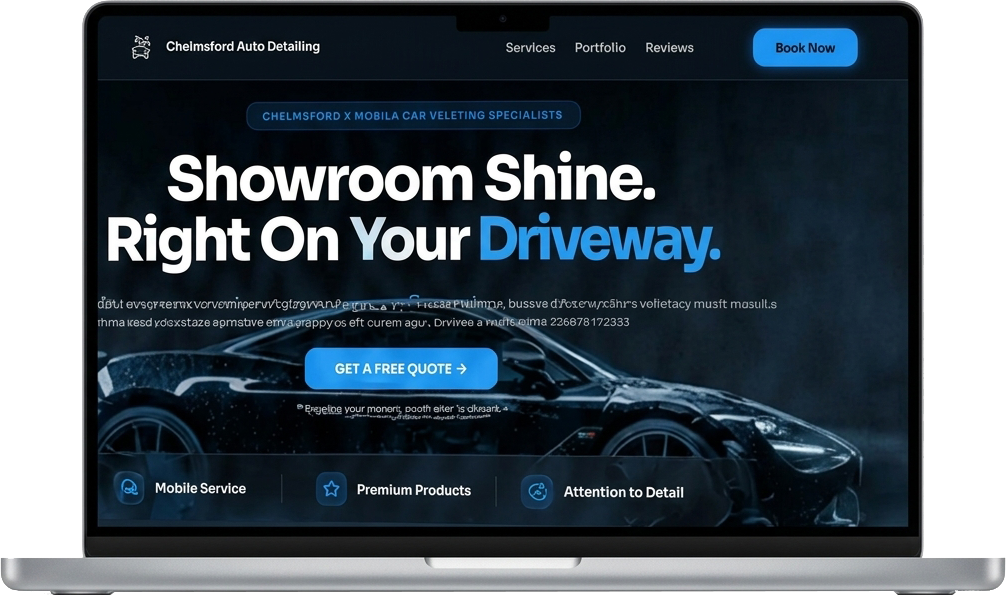
2. Build Your Own Professional Website
Facebook and Instagram are great for showing off your work, but your own website gives potential customers a dedicated place to learn about your services.
A good car valeting website should include:
Your services and packages.
Areas you cover.
High-quality photographs of your work.
Before-and-after galleries.
Genuine customer reviews.
Clear contact details.
An easy-to-use quote request form.
Mobile-friendly pages.
You can also create dedicated pages targeting the locations where you genuinely provide services.
Need a website for your new valeting business?
At SMB Booster, we build professional car valeting websites for £0 upfront and just £25 per month, including hosting, minor updates, support and access to our Business Hub.
See our Car Valeting Website Design Service
3. Use Facebook Groups to Reach Local Customers
Local Facebook groups can be useful when you're launching.
Look for community groups in the towns you cover and check whether business promotions are permitted.
Rather than repeatedly posting an advert, introduce your business and share genuine examples of your work.
For example:
"Hi everyone! I've recently launched a mobile car valeting service covering Chelmsford and nearby areas. I offer interior and exterior cleaning at your home or workplace. I'm taking bookings for next week and would love to help anyone whose car needs a proper refresh. Feel free to message me for a quote."
Use real photographs whenever possible.
4. Post Before-and-After Content
Vehicle transformations are ideal for social media.
A particularly dirty interior being restored to a clean condition is much more compelling than a generic promotional graphic.
With permission, photograph and film your work.
Share short videos showing:
Interior deep cleaning.
Dirty seats being extracted.
Wheel cleaning transformations.
Before-and-after vehicle shots.
Paint polishing results.
Post consistently on Facebook, Instagram, TikTok and your Google Business Profile where relevant.
5. Approach Local Businesses
Don't limit yourself to private customers.
Potential commercial customers include:
Used car dealerships.
Taxi companies.
Driving instructors.
Vehicle rental operators.
Small delivery fleets.
Estate agents with company cars.
Local garages.
A single business with multiple vehicles could provide valuable repeat work.
Prepare a simple commercial price list and explain how your service saves their staff time.
6. Offer Regular Maintenance Packages
One of the best ways to stabilise income is to encourage repeat bookings.
For example, you might offer:
Monthly Maintenance Valet – From £55
Available to customers who have already purchased a full valet and want to keep their vehicles looking their best.
You could also offer fortnightly packages or discounted services for two vehicles at the same address, provided your pricing remains profitable.
Regular customers make it easier to plan your working week and reduce the pressure to find brand-new enquiries every day.
7. Ask for Reviews and Referrals
After completing a job, ask the customer whether they're happy with the result.
If they are, send them a link to leave an honest Google review.
You can also offer a referral incentive, such as money off a future service when an existing customer introduces a new paying customer.
Never offer incentives specifically in exchange for positive Google reviews.
8. Try Local Google Advertising
Once your website and quote form are ready, you could experiment with Google Search Ads targeting people actively looking for car valeting services in your area.
Start with a modest test budget, perhaps £5–£10 per day, and track enquiries, bookings and actual profit.
Advertising is not automatically profitable. Pause or adjust campaigns that cost more than the value of the customers they produce.
9. How to Price Your Services Profitably
One of the biggest mistakes new valeting businesses make is setting prices based entirely on competitors.
Suppose you charge £50 for a valet.
If the job takes two hours, plus 30 minutes travelling each way, you've already spent three hours before accounting for chemicals, fuel, insurance, equipment wear and administration.
That's just £16.67 of revenue per working hour before costs.
Instead, calculate:
Your required hourly return + materials + travel + overhead contribution + profit margin.
Consider minimum booking charges and additional fees for large vehicles, excessive pet hair, heavily soiled interiors or long travel distances.
Customers who value quality and convenience are often more profitable than customers looking for the cheapest possible clean.
10. How to Stand Out From Other Car Valeting Businesses
You don't necessarily need to offer every possible service.
Sometimes specialising can make marketing easier.
For example:
Family Car Interior Cleaning
Focus on heavily used family vehicles, child-seat areas, crumbs, stains and general interior restoration.
Premium Mobile Valeting
Target customers who value convenience, careful workmanship and high-quality products.
Pre-Sale Vehicle Preparation
Help private sellers and vehicle traders present cars professionally before advertising them.
Car Detailing & Paint Protection
Provide specialist work for vehicle enthusiasts and customers investing in their cars' appearance.
Commercial Fleet Valeting
Offer scheduled vehicle cleaning for local businesses.
The clearer your target customer and service offering, the easier it becomes to explain why someone should book you.
11. Your First 30 Days: A Practical Launch Plan
Week 1 - Research and Planning
Research local competitors and their pricing.
Decide whether to operate mobile or from suitable premises.
Identify your ideal customer.
Choose your initial services and packages.
Create a realistic startup budget.
Investigate insurance and wastewater requirements.
Week 2 - Equipment and Business Setup
Purchase essential equipment and cleaning products.
Arrange appropriate insurance.
Organise business registration and record-keeping.
Set up safe equipment storage and working procedures.
Practise your services and time how long each takes.
Week 3 - Launch Your Online Presence
Create your business website.
Set up your Google Business Profile if eligible.
Create Facebook and Instagram business pages.
Add genuine service photographs.
Prepare your enquiry and booking process.
Publish your first promotional posts.
Week 4 - Find and Book Customers
Introduce your business in permitted local groups.
Contact relevant dealerships and fleet operators.
Share before-and-after photographs.
Request reviews from genuine customers.
Promote a clearly priced introductory package.
Follow up with enquiries that haven't booked.
Track enquiries, completed jobs, revenue and profit.
By the end of your first month, the goal isn't necessarily to be fully booked.
It's to have a functioning business, a professional online presence, early customer feedback and a repeatable way of attracting enquiries.
12. Mistakes to Avoid When Starting a Valeting Business
Buying Too Much Equipment
Begin with the essentials. Upgrade as you learn which services customers actually purchase.
Charging Too Little
Low prices can keep you busy without providing a sustainable income.
Ignoring Travel Time
Grouping appointments geographically can make a major difference to your profitability.
Relying Entirely on Facebook
Social media is useful, but a website, Google visibility and referral system provide additional ways for customers to find you.
Forgetting Repeat Customers
It's often easier to secure another booking from an existing happy customer than to win a completely new one.
Neglecting Insurance and Wastewater Rules
Damage claims and environmental issues can become far more expensive than setting up correctly in the first place.
13. Frequently Asked Questions
Can I start a car valeting business with £1,000?
Potentially, if you already own a suitable vehicle and start with limited services and basic equipment. You must still allow for appropriate insurance, safe working arrangements and other essential costs.
Do I need a van to start mobile valeting?
No. Some beginners use an existing suitable vehicle, although a van becomes more useful as equipment and customer demand increase.
Is mobile car valeting profitable?
It can be. Profitability depends on the prices you charge, number of bookings, travel time, operating expenses and your ability to attract repeat customers.
How much can a self-employed car valeter earn?
Earnings vary enormously. A part-time operator may earn supplementary income, while a busy full-time valeter could generate several thousand pounds in monthly turnover. Actual profit and personal take-home income will depend on costs, workload and tax.
Do I need qualifications to valet cars?
There is generally no mandatory car valeting qualification for basic cleaning services, although training is strongly recommended, especially for professional detailing, machine polishing and specialist treatments.
Should I offer mobile valeting or open a workshop?
Mobile valeting usually requires less initial investment. A workshop can be more suitable for premium detailing and specialist work, but brings greater fixed costs.
How do I get customers when starting from scratch?
Begin with a professional website, Google Business Profile, local social media, genuine before-and-after photographs, referrals and direct approaches to businesses with multiple vehicles.
Final Thoughts: Is a Car Valeting Business Worth Starting?
Starting a car valeting business in the UK can offer a relatively affordable route into self-employment.
You can begin part-time, develop your skills, gradually upgrade your equipment and eventually expand into premium detailing or commercial vehicle contracts.
But success requires more than cleaning cars well.
You'll need sensible pricing, reliable service, good financial management and a consistent way of attracting customers.
Start small, keep your overheads under control, focus on customer satisfaction and build a business that generates repeat bookings.
Ready to Launch Your Car Valeting Business?
Give your new business a professional online presence from day one.
At SMB Booster, we help UK mobile valeters and detailing businesses get online without large upfront website costs.
For just £25 per month with £0 upfront, we'll create your professional website and provide hosting, unlimited minor updates, support and access to useful business tools.
Get Your Car Valeting Website Built for £0 Upfront
SMB Booster – Professional websites and practical business tools for UK service businesses.